Holding on to Home: I Love Enderly Park
The Writer's Perspective
Written by Shamaiye Haynes
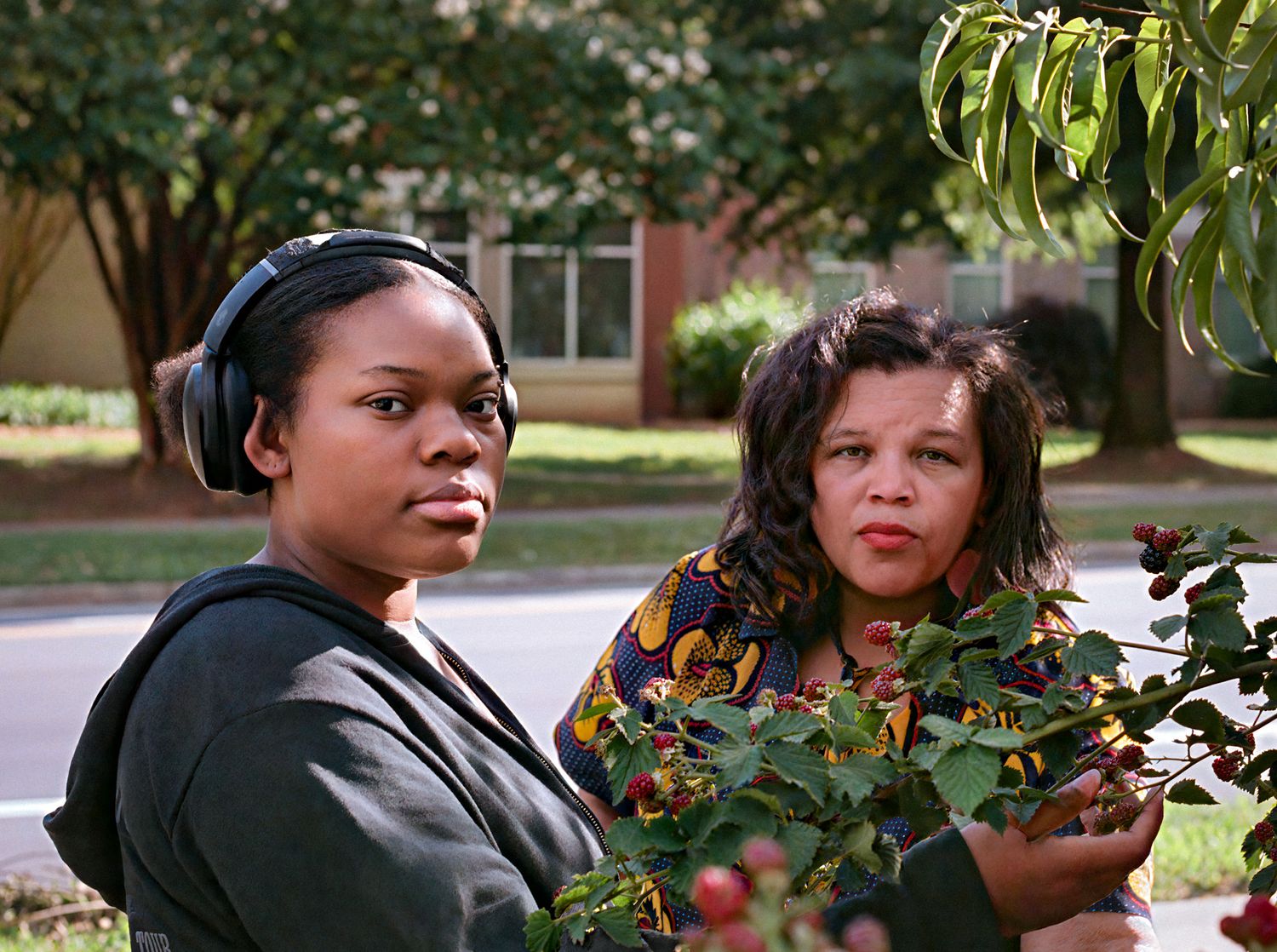
As I was writing this story, I realized I had to let go of many of the ideas I thought I wanted to tell.
I came into this project with opinions, observations, and my own experiences. But somewhere along the way, I realized that if I wanted to tell an honest story, I first had to answer a much simpler question.
Why?
Why this neighborhood?
Why these people?
Why now?
The answer brought me back to the beginning.
I wanted to co-create this project with my neighbor and friend Kaley Fry because we both believe our neighborhoods are more than streets, houses, and property lines. They are living collections of memories, relationships, traditions, and ordinary moments that shape who we become.
When neighborhoods like ours begin to change, we almost immediately reach for the word gentrification. The conversation often stops. We can debate development, rising property values, trendy businesses, and whether we’ve become “the cool place to be.”
What we rarely discuss is something far more complicated.
What if what we are witnessing is desegregation unfolding without the public policies necessary to ensure that everyone can participate in the opportunities that change creates?
What happens when neighborhoods become more economically and racially diverse, but the people who weathered decades of disinvestment cannot afford to remain long enough to experience the benefits of that investment?
That question stayed with me throughout this project. Admittedly, this is not a new question and is fully worth raising over and over again.
Holding on to Home: I Love Enderly Park is not an argument against change. Communities should grow. They should welcome new neighbors, new ideas, and new investment. Our neighborhood association is proof that it’s possible.
My family came to Charlotte looking for opportunity, and both the Hoskins community and Enderly Park welcomed us.
Land tells one story.
The people who call it home tell another.
We often limit housing to buildings, rents, mortgages, and development. But it’s much more than that. It’s power. The people and institutions who control land, whether public or private, nonprofit or for profit, influence far more than where people live. They can shape who feels secure enough to stay, who feels free enough to speak, and whose memories remain rooted in a place.
For those who do not control the land beneath their feet, housing can also determine how far one feels able to go in seeking liberation and freedom. Dependency can lower resistance to culture creeps who come into a neighborhood to advance vanity projects or self-soothing initiatives. When people depend on someone else to meet a basic need, they may feel pressured to pander or even support people and institutions that harm them for fear that the need will no longer be met.
That is why this project is important to me.
When people are displaced, we lose historians, legacy Black families, caregivers, neighbors, and the everyday relationships that give a place its identity. We risk losing the voices that tell the story of a neighborhood from the inside out.
At the same time, I have also learned that new does not automatically mean harmful.
Communities are strongest when they make room for both history and possibility. New neighbors can bring fresh energy, relationships, and ideas. Longtime neighbors carry history, wisdom, and lived experiences that cannot be recreated.
We need both.
The question is not whether neighborhoods should change. They always have and they always will.
The question is whether the people who weathered decades of disinvestment have the opportunity to remain and share in the prosperity that follows.
I invite you to read these stories with that question in mind.
The stories that shape a neighborhood should never belong only to those who have the power to own the land.
They also belong to the people who have sustained it, strengthened it, and called it home through every season of its history.
Understanding Enderly Park
Every neighborhood has a history that lives beyond maps and property lines.
Enderly Park is no exception.
Established in 1925 on land once known as the Enderly estate, the neighborhood was envisioned as a modern streetcar suburb for Charlotte’s growing working class middle class. Like many neighborhoods of its time, however, that vision was not available to everyone. Early deed restrictions limited homeownership to White residents, reflecting the segregation that shaped cities across the South. The language can still be found on deeds today, even though such racial restrictions are no longer enforceable.
Over the decades, Enderly Park changed.
As Charlotte evolved, so did the neighborhood.
By the late twentieth century, Enderly Park had become a predominantly Black community, home to generations of families who built lives here, cared for one another, and invested in churches, schools, businesses, and neighborhood traditions, often through years when outside investment was scarce.
The destruction of Charlotte’s Brooklyn neighborhood through urban renewal is also part of the larger story of where Black families could live as the city transformed. Families and businesses were displaced, and communities across Charlotte’s west side became part of a changing geography for Black Charlotte.
Today, Enderly Park is changing once again.
New neighbors are arriving.
Homes are being renovated.
Businesses are opening.
Investment is returning.
The irony is difficult to ignore. A neighborhood originally developed with racial barriers eventually became home to generations of Black families and is now becoming more racially diverse again.
But desegregation and equity are not the same thing.
A neighborhood becoming more diverse has not automatically meant the people who sustained it benefit from the transformation.
That is part of the story we are living now.
These pages do not attempt to tell the complete history of Enderly Park. Instead, they offer something equally important.
The lived history of some of the people who call it home.
The Neighbor Who Arrived
I arrived in Charlotte in 2012 with my husband and our two youngest children.
We had never set foot in the city before that.
We came with optimism. We believed what so many people believe: that there would be economic opportunity and that if we played by the rules and worked hard, life would move in the right direction.
You’d build a career.
Buy a home.
Put down roots.
Eventually find your place.
For our first six months, home was an extended stay hotel.
Eventually, we found a small green bungalow on a dead end street in the Hoskins neighborhood, just five minutes from Enderly Park. We told ourselves it was temporary, a place to land while we figured out our next chapter.
Temporary stretched into nearly ten years.
What started as a starting spot became a trap so many working families know all too well.
The house changed hands every couple of years as one property management company replaced another. We never really knew who owned it. As the house slowly deteriorated, accountability seemed to disappear with each new management company.
Repairs became harder to secure.
Conditions worsened.
Still, moving wasn’t simple.
Every promising rental required application fees that could total hundreds of dollars with no guarantee we would ever receive the keys. We watched housing costs climb faster than our ability to save. Homeownership drifted further out of reach while affordable rentals became increasingly scarce.
Then, in February 2020, the kitchen ceiling collapsed.
Standing in my own kitchen, staring at insulation, broken drywall, and years of neglect scattered across the floor, I found myself fighting for something as basic as a safe place to live.
Before the repairs could even be resolved, the world shut down.
One month later, I packed up my work and was sent home because of the COVID 19 pandemic.
The house that had become impossible to leave suddenly became the place I could not escape, even if I wanted to.
Then the management company sent a letter telling us our rent would more than double.
Before fixing the ceiling.
Before addressing the other maintenance requests.
I called to negotiate.
They came down significantly, but rent still jumped by one hundred dollars.
Yes.
This was during the pandemic.
The months ahead were difficult, but somehow, we held on.
The pandemic was also a period of tremendous unrest for me. Even while I was insecure about my own housing, I was still showing up virtually for work, taking on special projects, organizing in the community, helping with COVID vaccine clinics, and working to improve educational opportunities.
I was working my hind parts off.
Then one morning, I reluctantly joined a Zoom call hosted by a local nonprofit.
Only two people showed up: me and a close friend I had encouraged to join.
For whatever reason, I shared my housing situation.
It was something I had mostly kept to myself.
I was embarrassed.
Here I was working, organizing, helping other people solve problems. My husband and I were both working and entrepreneuring, and yet we were not in control of something as basic as our own housing.
How could it be?
That moment of vulnerability changed our lives.
The nonprofit offered my family the opportunity to rent a home at a price we could afford, just up the road in Enderly Park.
The house had been named the Harriet Tubman House.
I fully embraced the name.
For my family, that house represented freedom.
Many people drive down Tuckaseegee Road and know it simply as the yellow house.
I call it that too sometimes.
But in my mind, it will always also be the Harriet Tubman House.
Shortly after moving there, I began working with the organization that owned it. At the time, I believed I was joining people sincere about Black liberation, upward mobility for marginalized people, and preserving the culture of the people who existed here long before any of us arrived.
The work experience ended and added a tad more uncertainty again.
What I gained from the people I met far outweighs the disappointment.
And that is where About Us really begins.
About Us: How We Are Holding on To Home
Mr. Frank: Our Community Steward
One of the first people who became special to me was Mr. Frank.
Mr. Frank is a phenomenal steward of our community.
He is the kind of neighbor who notices things.
The trash that needs picking up.
The grass that needs cutting.
The person who hasn’t been seen in a few days.
He understands something that cannot be led by a strategic plan. A community requires people willing to care for it when nobody is watching.
Our relationship grew through work.
Sometimes through agreement.
Sometimes through disagreement.
And sometimes through Mr. Frank simply being Mr. Frank.
He can be cantankerous.
He can also be extraordinarily generous.
Both things are true.
Over time, I learned that stewardship is not carried out the same way for everybody. Sometimes it comes with opinions. Sometimes it challenges you. Sometimes it gets on your nerves.
But it keeps showing up.
Mr. Frank taught me that loving a neighborhood is not just talking about it, but also being about it.
It is about caring for what is already here.
And long after this neighborhood has changed again, I hope there will still be somebody looking out the window, noticing what needs attention, checking on the neighbor who hasn’t been seen, and caring enough to do something about it.
I hope somebody will still be modeling what Mr. Frank has shown us.
See about each other.
That is stewardship.
And that is one way we hold on to home.
And it was Mr. Frank who introduced me to two women who helped me understand just how deep that history runs.
Ms. Peggie and Ms. Clara: A Quiet Royalty
Mr. Frank introduced me to Ms. Peggie and Ms. Clara, and what a blessing!
They are something of a dynamic duo.
For years, I mixed up their names.
Sometimes I still have to concentrate.
Fortunately for me, they have always been good sports about it.
Ms. Peggie returned to the neighborhood in 1989, although her history in Enderly Park began earlier. She had previously rented apartments on Glenwood and Parkway. Ms. Clara dates her time here back about three decades.
Both are retired.
Both came to this community because of the opportunity it represented.
And both worked alongside Bette Rae Thomas, the iconic neighborhood leader whose work helped secure the recreation center that now carries her name.
Ms. Clara lived near Ms. Bette Rae. In fact, the home where Kaley and Sam live today was Bette Rae’s home.
Ms. Peggie and Ms. Clara have told me story after story about how Bette Rae stood up for this community and how they stood alongside her.
What they probably would not say about themselves is what I need to make clear.
They represent a kind of royalty in our community.
Quiet.
Dignified.
Resilient.
Not everyone leads by going to City Hall, writing letters, organizing protests, or standing behind a microphone.
People like Peggie and Clara lead by holding up the dignity and integrity of this community through their everyday actions.
They remember a neighborhood that stood tall. A place where dogwood and cherry blossom trees were prevalent. A neighborhood that was integrated and where families saw possibility.
Even the trees tell part of the story.
Tree lined streets are easy to take for granted, but environmental beauty and protection have never been distributed equally. Shade, mature trees, parks, and well-maintained public spaces shape how a neighborhood feels and how people experience it. For generations, public policy and investment helped preserve those amenities in some communities while others received less.
Ms. Peggie and Ms. Clara remember the beauty.
They also carry the history.
When I ran for school board and won in November 2025, I stepped away from leadership in the neighborhood association.
They stayed.
They supported the new leadership.
They continued welcoming new neighbors.
They continued offering wisdom.
They continued showing up.
That is important.
Generations have to see one another for the value each brings.
Longtime residents should not have to disappear for new neighbors to belong.
And new neighbors should not have to reject the future in order to honor the past.
Ms. Peggie and Ms. Clara, we stand on your shoulders.
I admire the dignity, care, and love you have exuded every time you show up.
And somehow, you always show up for us.
Rufus Lockhart: Room for Complexity
Not every neighbor we honor will be someone we understand perfectly.
That is part of telling an honest community story.
Rufus Lockhart has spent years publicly centering fathers, families, and men navigating difficult circumstances.
Rufus and I are not close.
In fact, he does not really know me.
That has not always stopped him from having an opinion about me.
And if I am being completely transparent, there have been moments when those opinions have made it easier for me to keep my distance.
But community storytelling cannot be reserved only for people with whom I am comfortable.
If I believe legacy neighbors deserve to be seen in their fullness, then that principle has to apply even when the relationship is complicated.
Rufus has created work centered on fathers and families. He knows how to build relationships and bring attention to issues he believes deserve it.
That is part of the story of this community too.
I can acknowledge his contribution without pretending our relationship is something it is not.
Maybe that is another lesson neighborhoods teach us.
We do not have to agree with everyone.
We do not even have to like everyone.
But if we are serious about telling the story of a community, we have to leave room for complexity.
Ms. Peaches: Choosing Joy
Then there is Ms. Peaches.
I met Ms. Peaches in 2023 when I was running for public office for the first time.
I cannot remember exactly where we met, but I remember asking whether she would be willing to help me get elected.
Like every good civic-minded person should, she did not immediately say yes.
She wanted to know why she should.
Who was I?
What did I believe?
Why should she invest her time in me?
Apparently, I passed the test.
She gave me the biggest hug and told me she would help.
And she did.
She worked the polls.
She greeted potential voters.
She kept in touch.
And when I ran again in 2025, she showed up again.
Somewhere between campaign season and ordinary life, Ms. Peaches stopped feeling like a supporter and started feeling like a sister.
If you have ever met her, you understand why.
Peaches is not quiet about much.
But she is gentle.
Her joy has presence.
You can call her carrying the weight of the world and somehow, by the time you hang up, you are laughing.
Your problems don’t disappear.
She simply helps you believe you can carry them.
That kind of joy is not naïve.
Ms. Peaches has experienced tremendous loss.
Housing instability.
The loss of her brother.
The loss of her mother.
Grief upon grief.
And still, she returns to Enderly Park.
She remembers the home where she made memories with her mother.
She remembers birthdays, family gatherings, laughter, and ordinary moments that became priceless once the people she loved were gone.
Those memories keep her connected.
I once asked Ms. Peaches to describe this season of her life in one word.
She did not hesitate.
Joy.
Before I met Ms. Peaches, I think I understood joy as something people found after life got better.
She has been a model for how joy can be chosen while life is still hard.
There are very few people who allow themselves to experience joy in the midst of hardships and pain.
Ms. Peaches is one of those rare people.
I love her dearly.
She is my sister for life.
Bunny Gregory: Seeing What Others Miss
Bunny Gregory is an established artist and native Charlottean.
I met Bunny during one of the hardest seasons of my life.
It was the tail end of COVID. Although the world was beginning to reopen, I was still carrying the weight of everything we had lived through.
I was hearing about people losing entire families.
People struggling to find employment.
People struggling to remain housed.
I had been in the fold of what felt like everything.
By the time life began to resemble something close to normal, I was tired.
Burned out.
Leaving the private sector and working for a nonprofit felt like it might be exactly what I needed.
I figured out pretty quickly that a nonprofit, in and of itself, does not offer healing.
People do.
I survived there for almost five years because of Bunny and people like her.
Bunny was one of the first artists I met during that chapter of my life.
The funny thing is, when I met her, I thought I must be one of the most important people in her life because she was so generous with her time.
We would sip wine and save the world.
I would leave inspired to create.
At one point, I purchased hundreds of dollars worth of paint, brushes, and other supplies because Bunny and I were going to paint and sip. Keep in mind, this was in 2021.
Somehow, almost all of it ended up in my office closet.
Unopened.
Earlier this year, I cleaned out the closet and found the whole stash.
I laughed.
When I told Bunny about the foolishness of having hundreds of dollars worth of art supplies tucked away in the great unknown, I expected her to laugh too.
She did not.
She simply shrugged.
“Yeah. That’s what us artists do. I’m not surprised, Shamaiye.”
Really Bunny? Just like that?
Bunny has always told me that I am a closet artist.
Eventually, I discovered that there are hundreds of creatives and artists who believe they have some special connection with Bunny too.
That is when I realized I was not the exception.
Maybe all of us were.
Bunny’s creativity is her love, and she loves people through her creativity.
She shares her skills freely.
She can build almost anything.
She has an instinct for making something beautiful, provocative, and sometimes downright funny.
She sees possibility where other people see limitations.
She looks at the world with curious eyes, gathering what she sees and learns to challenge injustice and imagine something different.
Bunny yearns for the freedom to create without interruption, to climb into her bus, follow her curiosity wherever it leads, and spend her days making the world a little more beautiful than she found it.
I hope she gets there.
The world needs more people like Bunny Gregory in it.
Looking back, I realize she was not trying to teach me how to paint.
She was teaching me something much bigger.
She was teaching me to trust my own creativity.
To stop waiting until I felt qualified enough to call myself an artist.
Bunny had already made up her mind about me.
She simply waited for me to catch up.
Artists have a way of seeing what others miss.
They notice beauty where others see deterioration.
Possibility where others see limitation.
Stories where others see strangers.
Bunny Gregory has spent a lifetime seeing the world that way.
I am grateful that somewhere along the way, she taught me to look a little longer and deeper and to take notice.
Ms. Karen: Never Too Grown for Joy
Ms. Karen is a quirky lady with a heart of gold.
She has lived in Enderly Park since 1965, when her parents purchased the home she still lives in today.
When other families chose to leave as the neighborhood changed, her family stayed, right there on Bonair. She thinks part of the reason was practical. Her father worked close by, near the I 85 Service Road.
Whatever the reason, they stayed.
And all these years later, so has she.
You do not have to spend much time around Ms. Karen before discovering that she is one of the most energetic people you will ever meet.
Her hugs are big and genuine.
Her smile is even bigger.
She walks through the neighborhood, works out at the Bette Rae Thomas Recreation Center, participates in senior activities, and rarely misses a neighborhood association meeting.
Somewhere along the way, she also became our resident jewelry maker.
Ms. Karen brings a rare flair to the meetings, coupled with her joy filled spirit and, of course, always her delightful self.
Her home feels much the same way she does: warm, inviting, and full of life.
She takes delicate care of her partner Brian and her three fur babies, Bailey, Buffy, and Maggie.
Some years ago, Ms. Karen suffered a stroke. Since then, she has taken her health seriously, and she encourages me and others to do the same.
That is one reason the Bette Rae is so important to her.
It gives her somewhere to move.
Somewhere to connect.
Somewhere to stay active.
Somewhere to keep living.
And Ms. Karen is definitely living.
I will never forget when Kaley called me after one of those rare Charlotte snowfalls and told me that they and Ms. Karen had made snow angels.
I did not have to be there to see it.
I could picture Ms. Karen giggling with excitement and pure fun, flapping her arms, and announcing how SHE JUST LOVES THE SNOW!
There is something beautiful about a person who refuses to become too grown for joy.
Mr. Brian, her partner, seems to understand that about her. He gently lets Ms. Karen be Ms. Karen.
He lets her go.
Lets her play.
Lets her laugh.
And we are all better for it.
After nearly six decades in Enderly Park, Ms. Karen has watched this neighborhood change in ways many of us can only imagine.
What strikes me most is not simply that she stayed.
She stayed with warmth.
With curiosity.
With movement.
With laughter.
Holding on to home does not always have to look like struggle.
Sometimes it looks like taking a walk through the neighborhood you have known most of your life.
It looks like handmade jewelry at a community event.
It looks like a big hug.
And every once in a while, if Charlotte gives you just enough snow, it looks like making snow angels with your neighbor.
Kaley and Sam: Loving Through Witness
Kaley and Sam came to their first neighborhood association meeting after receiving a flyer hand-delivered by Ms. Peggie.
That seems fitting.
After all, they live in the home of one of Ms. Peggie’s closest former neighbors, the legendary Bette Rae Thomas.
Around here, we simply call it the Bette Rae house.
From the beginning, Kaley was willing to partner with me to build our little organization that could.
I am sure in those early years they thought I was a lunatic.
We have very different styles.
I tend to move quickly. I have ideas, lots of them, and once I see something that needs to happen, I am usually ready to get moving.
Kaley brought something we needed just as much.
Balance.
Temperament.
Patience.
And an extraordinary ability to meet people where they are.
I was, and remain, very protective of our neighborhood association.
I understood what can happen when neighborhoods begin changing. New neighbors arrive with resources, ideas, education, connections, and sometimes very strong opinions about what should happen next.
Without intention, the voices of legacy neighbors can slowly become drowned out in the very community they helped sustain.
I love people.
But I trust and verify.
Kaley has never judged me for that.
They never asked me to stop protecting what I believed needed protection.
Instead, they navigated the community in their own way.
They showed up.
Again.
And again.
And again.
They loved people without demanding anything in return.
What I have come to appreciate most about Kaley is that they never seemed to believe moving into Enderly Park entitled them to anything.
Not leadership.
Not influence.
Not relationships.
And certainly not trust.
They allowed those things to develop.
That is important.
There are people who enter communities and immediately seek to dominate them. They arrive believing their ideas should lead, their voices should carry farther, or their presence somehow gives them authority.
They force themselves into relationships before trust has had an opportunity to grow.
Kaley showed me something different.
You can enter a community with something to offer without assuming the community owes you a place at the center of it.
You can listen.
You can learn.
You can contribute.
You can be accountable.
And you can love people while trust takes its time.
Over the years, I watched Kaley uncover a balancing act I had struggled to put into words.
Protection and openness.
Love and accountability.
History and possibility.
Making room for new voices without allowing older ones to disappear.
Maybe that is part of what healthy neighborhood change requires.
Not one group replacing another.
Not longtime neighbors distrusting everyone who arrives.
And not new neighbors assuming that buying property gives them ownership over the story of a place.
Relationship.
Trust.
Care.
Time.
Kaley has brought all of those things.
They also have an almost relentless curiosity.
Kaley is always learning something.
I think they have taken at least ten classes this year alone.
Every time I turn around, they are learning another skill, exploring another idea, or figuring out something new they can bring back and build with somebody else.
I admire that.
Knowledge does not seem to be something Kaley wants to accumulate for themselves.
They want to do something with it.
Usually with somebody else.
And then there is Sam.
Poor Sam.
Sam is always trying to keep up.
Every new idea.
Every activity.
Every class.
Every community project.
Every adventure.
Sam seems to sigh, climb aboard, and support the whole thing.
But the relationship is not one-sided.
Sam is teaching Kaley too.
Including, apparently, how to cook.
Perhaps my favorite image of the two of them is exactly how I think about their relationship.
Their electric bike.
Kaley driving.
Sam on the back, seemingly perfectly happy to be along for the ride.
Whenever I see them coming down Tuckaseegee Road, I smile.
There they go.
Kaley leading the next adventure.
Sam holding on.
And somehow, both of them making their way through this neighborhood together.
There is another reason Kaley belongs deeply in this story.
This project would not exist without them.
Kaley is a photographer, but calling them the photographer for Holding on to Home does not adequately describe what they have done.
They have witnessed.
They have listened.
They have entered people’s homes.
They have handled their stories with care.
They understand that the people we are documenting are not subjects for us to interpret however we choose.
They are our neighbors.
There is a deeper understanding between us that Enderly Park is more than a neighborhood.
We are a collective of stories and experiences.
Memories.
Relationships.
Joy.
Loss.
People who stayed.
People who could not.
People who arrived later and decided to become part of what was already here.
Every person adds something.
This project required someone who understood that.
Kaley did.
And somewhere in the process of working together, our partnership became one of the relationships I cherish most.
I am sure I have driven them crazy.
I have changed ideas.
Changed themes.
Rewritten things.
Thrown things away.
Started over.
And probably announced a brand-new revelation immediately after we thought we had finally figured everything out.
Kaley stayed with me.
Patient.
Curious.
Open.
Never making me feel that my protectiveness was too much or that my constant questioning was something I needed to apologize for.
Instead, we learned from each other.
Neither of us had to become the other.
We found balance.
Photographers witness.
They notice.
They preserve.
They refuse to let ordinary moments disappear.
But Kaley has taught me that witnessing requires something else too.
Humility.
You have to be willing to see people as they are instead of who you expect them to be.
You have to understand that being invited into someone’s story is a privilege, not an entitlement.
And you have to care enough to handle what they give you gently.
That is what Kaley has done throughout this project.
That is what Kaley and Sam have done as neighbors.
They did not arrive and demand a place in the story.
They built relationships.
They earned trust.
And somewhere along the way, they became part of it.
I am deeply grateful for the friendship, partnership, care, and love.
Every time I see that electric bike coming down the street, with Kaley driving and Sam happily riding behind, I think:
There go my people.
Susan: When Holding On Isn’t Enough
And then there is Susan.
I knew something was wrong when I saw the furniture.
I had driven past Susan’s home before, but this time her belongings were sitting along the curb.
It was beautiful furniture.
That is what got me.
This was not a pile of things that looked discarded or unwanted. This was furniture someone had cared for. Furniture that had lived inside a home. Furniture that had held people, meals, conversations, and memories.
Looking at it sitting on the side of the road, my heart sank.
There are things you begin to understand when you have experienced housing insecurity yourself.
When someone’s belongings are piled along a curb, you know there may be a story behind them that has nothing to do with whether those things were wanted.
Maybe there was no truck.
No storage.
No money to move them.
No next place large enough to hold them.
Maybe there simply was no next place yet.
In Susan’s case, what I feared was true.
She could no longer live in the home.
I tried to reach her but was unable to connect.
Thankfully, Kaley was.
They were able to capture part of Susan’s story.
And I am grateful they did.
Because Holding on to Home cannot only tell the stories of people who were able to stay.
We also have to remember the people who could not.
There is a temptation when we talk about changing neighborhoods to focus on what has arrived.
We want to avoid the tension of admitting that there are negative consequences for the sake of progress.
The renovated houses.
The rising property values.
The new investment.
The new neighbors.
The things that signal progress.
But sometimes understanding change requires us to pay attention to what is disappearing.
Or who.
That day, Susan’s furniture sitting on the curb told a story before I ever heard the words.
It reminded me that displacement is not an abstract housing term.
It is, in fact, someone’s dining room table sitting outside.
A chair that once had a place in a living room.
A piece of furniture someone intended to keep but could not take.
A home someone can no longer call home.
A home they couldn’t hold on to.
Those images stay with me because I know how close my own family once came to a different outcome.
I know what it feels like to want desperately to remain somewhere while decisions about your housing are being made by people with far more control than you have.
And I know resilience alone does not determine who gets to stay.
Some neighbors hold on.
Some receive the help, opportunity, or good fortune that allows them to remain.
And some neighbors, despite everything they have invested in a place, are forced to let go.
Susan’s story belongs here for that reason.
This story is not a feature of failure or a cautionary tale.
And certainly not an interruption in an otherwise beautiful story about Enderly Park.
When we say we want to preserve the history of a changing neighborhood, we cannot preserve only the stories of people who remain visible to us.
We have to remember those whose absence becomes part of the landscape too.
I wish Susan had been able to hold on to her home.
I wish that beautiful furniture had never been sitting on the curb.
And we should not look away.
Maiye: Continuing the Story
And then there is Maiye.
My daughter.
She has quietly grown up alongside much of this work.
She knows these neighbors.
She has attended the events.
She has watched me organize, campaign, advocate, argue, celebrate, lose, win, and begin again.
She has watched more than I realized.
When our family finally moved into the Harriet Tubman House, our furniture had not arrived yet.
We sat together in an almost empty house.
Maiye was excited about her room.
The space.
The new beginning.
Then she looked at me and said something I have never forgotten.
“Mommy, I hope you and Daddy are happy now.”
Children notice everything.
They may not understand rent increases, housing insecurity, employment, politics, or the weight adults carry.
But they know when their parents can finally breathe.
Maiye was celebrating a bigger house, and she was celebrating peace.
Today, she is becoming a young woman with her own interests, gifts, and dreams.
She is an entrepreneur and a DJ.
She has brought music to neighborhood events and celebrations. She has supported my campaigns and my community work without ever asking to become part of either.
We often thank our spouses.
Our volunteers.
Our friends.
Our supporters.
We rarely thank our children.
But our children support us too.
They grow up alongside our callings.
They give us grace when the work pulls us away.
They hear people form opinions about the parents they know intimately.
And sometimes they become independent a little earlier because they understand that Mom or Dad is trying to do something they believe matters.
Maiye has supported me in ways I probably will not fully understand until she is grown.
People often want their children to take the path they did, and as a mother I am no exception to some extent.
But I do not want Maiye’s life to look exactly like mine.
I hope her opportunities are greater.
Her road gentler.
Her burdens lighter.
I have often said that when we think we are leaving a legacy, we have it wrong.
The truth is that during our lifetime, we are simply contributing to a much longer story.
Generations do not stop because one family member leaves.
The story continues.
Our children continue, their children continue, and every generation adds something of its own.
I imagine Maiye carrying the brilliance of her grandmother and great-grandmother.
I hope she carries the strength and resilience of the women who came before her.
But most of all, I hope she adds something entirely her own.
Mr. Frank has shown her stewardship.
Ms. Peggie and Ms. Clara have shown her dignity and faithful presence.
Ms. Peaches has shown her joy.
Bunny has shown her creativity and possibility.
Ms. Karen has shown her that we should never become too grown to play.
Kaley and Sam have shown her what it means to enter relationships with care.
And Susan’s story reminds all of us that the ability to remain in a community should never be taken for granted.
These people are part of the village that has surrounded my daughter.
For that, I will always be grateful.
My deepest hope is not that Maiye becomes me.
It is that she becomes fully herself.
She is not my legacy.
She is part of our continuation.
One day, her generation will decide what comes next.
I hope we leave them something worth continuing.
Holding On
This project has given me something I did not expect.
It has given me the freedom to say thank you.
Thank you to the neighbors who welcomed my family.
Thank you to the people who trusted us with their stories.
Thank you to those who challenged me.
Thank you to those who changed me.
Thank you to those who made me laugh.
Thank you to those who simply kept showing up.
Every person in these pages is uniquely created.
Different backgrounds.
Different generations.
Different experiences.
Different opinions.
Different journeys.
Yet we all believe something about this neighborhood.
During a neighborhood meeting, we came together and tried to put it into words.
Together, we wrote:
“We are a community rooted in love, pride, and hope, a pocket of peacefulness where people feel safe and happy. We honor our shared memory and history, appreciating all that has shaped us. We believe every person belongs here: seen, connected, and included, especially those who have felt overlooked. And as we hold on to what makes us us, we grow, evolving together with intention and care.”
I believe in us.
I believe in the people of Enderly Park.
We don’t always need to agree.
Change is not always easy.
I believe in us because I have watched neighbors try to live out our joint statement by putting words into action.
When I began this project, I was thinking a lot about gentrification.
I still do.
But these stories have forced me to think beyond that word.
I now know what can happen when new neighbors arrive and build relationships with humility and care.
I know legacy neighbors can welcome people while continuing to protect the history they inherited.
I know people who disagree can remain part of the same community.
I know joy survives grief.
I know art helps people imagine something different.
I know a woman who has lived here since 1965 makes snow angels.
I know beautiful furniture can end up sitting on a curb because somebody could no longer remain in the place they called home.
All of it is Enderly Park.
The beauty.
The complexity.
The contradiction.
The loss.
The possibility.
Holding on to home is not a refusal of change.
It means we believe growth requires us not to forget one another.
It means we recognize that new neighbors can bring energy and ideas while longtime neighbors carry memories and knowledge that cannot be recreated.
It means we understand that a neighborhood can grow while still honoring the people who sustained it before investment returned.
And it means being honest enough to acknowledge that not everyone who wants to hold on will be able to.
That should trouble us.
The stories of a place cannot belong only to those who own the land.
They belong to the people who loved it.
Cared for it.
Raised children in it.
Walked its streets.
Fought for it.
Made jewelry for it.
Made music in it.
Created art in it.
Took photographs of it.
Laughed in it.
Grieved in it.
Made snow angels in it.
And sometimes simply stayed.
When I began this project, I thought I was documenting our neighborhood.
I know better now.
I was writing about people.
We are more than a neighborhood.
We are a collective of stories and experiences, memories and relationships.
People who were born here.
People who found their way here.
People who stayed.
People who could not.
People who are still trying to figure out where they fit.
None of us owns the entire story.
We simply contribute our chapter.
One day, someone else will pick up the pen.
My hope is that when they do, they find Enderly Park still changing.
Still welcoming.
Still remembering.
Still making room.
Still asking hard questions about who benefits and who gets to stay.
Still rooted in love, pride, and hope.
Still holding on to what makes us us.
Still holding on to each other.
Still holding on to home.
About The Author
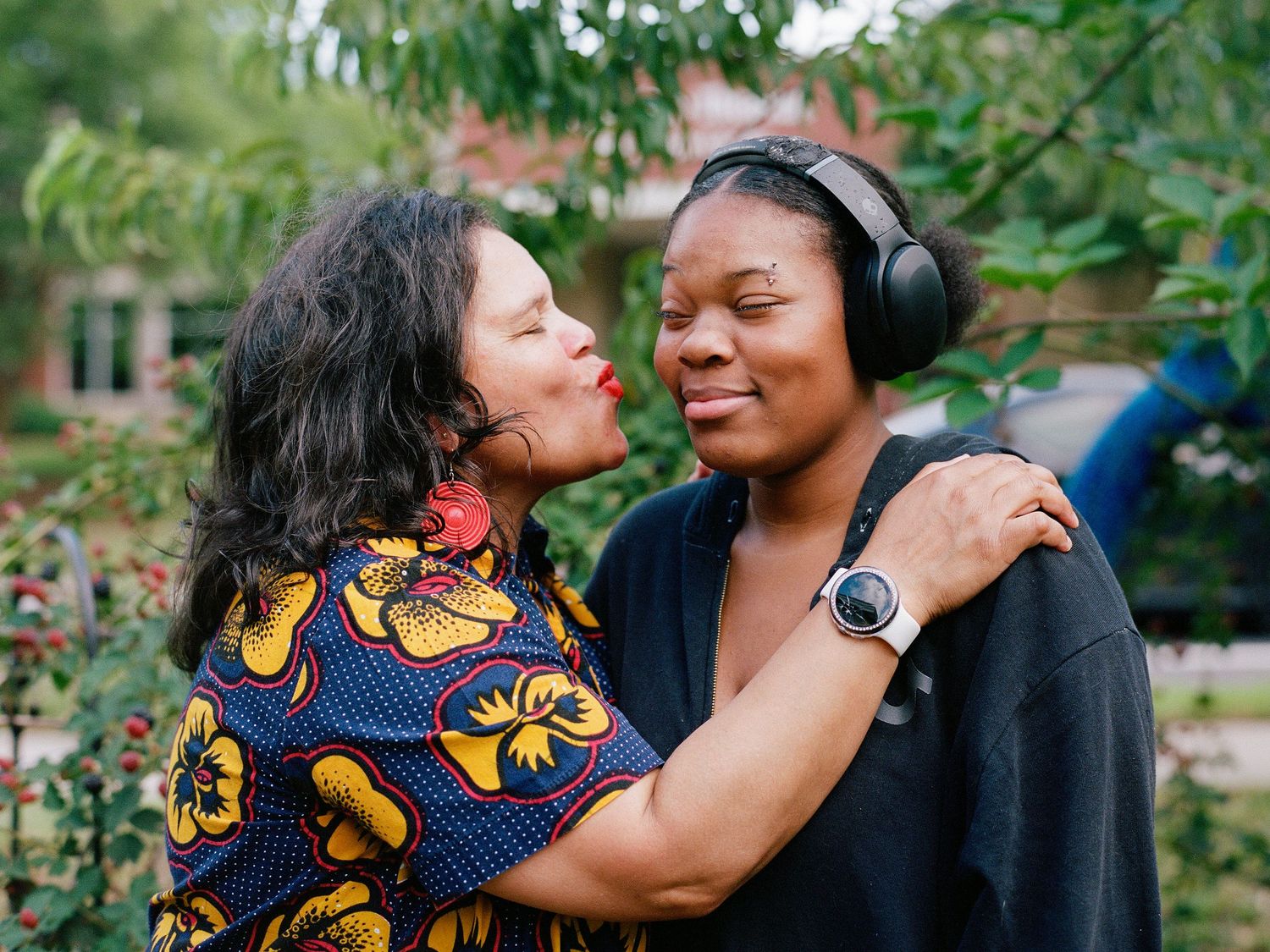
Shamaiye Haynes is a renowned neighborhood leader and writer, and the co-lead of this project. She is the former President of the Greater Enderly Park Neighborhood Association and currently represents District 2 on the Charlotte-Mecklenburg Schools Board of Education.
Shamaiye Haynes is a dedicated community organizer and nonprofit leader with a deep commitment to cultivating equity, opportunity, and belonging in Charlotte-Mecklenburg Schools. In addition, she is a talented writer and artists and has joined this project as a co-leader and lead writer.
Her love for the creative community inspires her belief in the power of art to tell stories, preserve history, and spark change. She sees education not just as a pathway to achievement, but as a cornerstone of justice and collective liberation.
With a track record of listening deeply, acting boldly, and leading with integrity, Shamaiye is committed to serving District 2 with transparency, collaboration, and a clear vision for what our schools—and our students—deserve.